
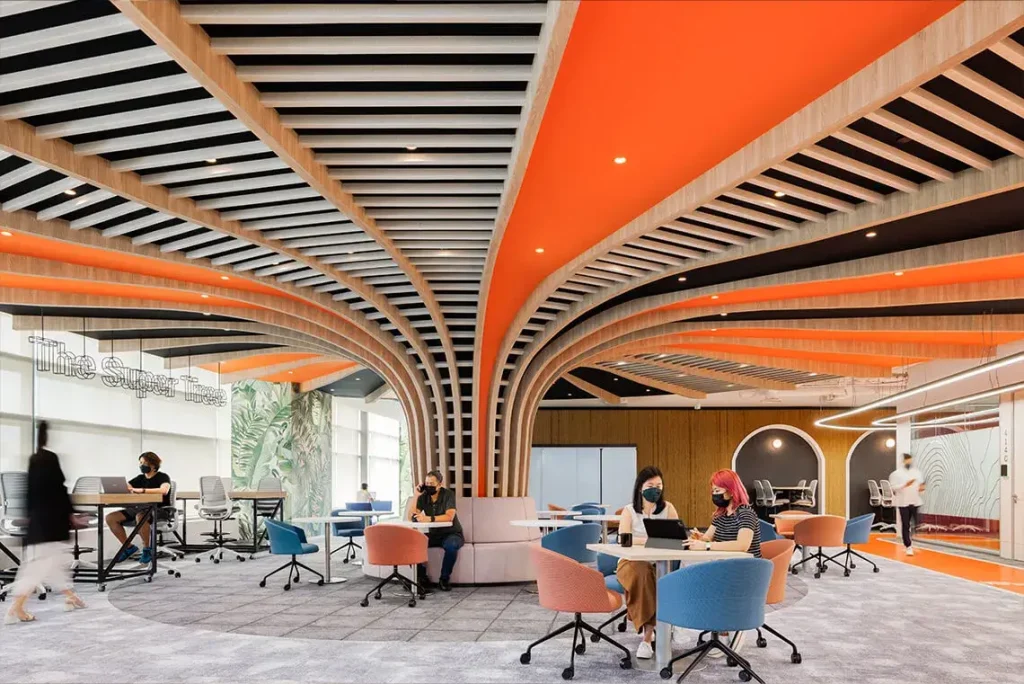
Let’s be honest. The traditional five-day office week feels a bit like a relic, a suit that just doesn’t fit anymore. In its place, the hybrid work model has taken root—a flexible, sometimes messy, but ultimately more human-centric way of operating. Companies are embracing it for talent retention and employee well-being.
But here’s the deal: this shift leaves business leaders with a massive, and often expensive, question. What on earth do we do with all this office space? That sprawling sea of cubicles, designed for 100% occupancy, now echoes on a Tuesday. The answer isn’t to abandon the office. Far from it. It’s to reimagine it. To transform it from a mandatory attendance zone into a magnetic destination for collaboration and culture.
Why Your Old Office Layout Is Costing You Money
Think about your current floor plan. Chances are, it was built for a bygone era. Rows of assigned desks sit empty, silently burning a hole in your pocket with every under-utilized square foot. It’s like paying for a full-time, all-you-can-eat buffet when your team only comes in for snacks and the occasional feast.
This isn’t just about wasted rent. It’s about wasted potential. An office designed for heads-down solo work fails to deliver the very thing that makes in-person time valuable: connection. If your team is just going to sit on Zoom calls at their desks, well, they could do that more comfortably at home. The old model simply doesn’t support the new way we work.
The Core Principles of a Smart Hybrid Workspace
So, how do you fix it? You start by embracing a few core principles. This is less about a one-size-fits-all solution and more about a philosophy.
1. Ditch Assigned Seating (Seriously)
The cornerstone of optimizing office space utilization is, without a doubt, the adoption of non-territorial or hot-desking policies. It sounds scary to some, but it’s the key to unlocking flexibility. When no one “owns” a specific desk, your space can naturally flex and contract with the daily ebb and flow of attendance.
2. Design for Purpose, Not Just Presence
Your office needs to become a toolkit of spaces. People come in for specific reasons—to brainstorm, to build rapport, to tackle a complex problem together. Your layout should facilitate that. This is the heart of activity-based working.
- Focus Pods: Small, soundproof booths for deep work or private calls.
- Collaboration Zones: Open areas with whiteboards, comfortable seating, and easy-to-use tech for impromptu meetings.
- Social Hubs: A kitchen or café-style area that encourages the informal conversations that spark innovation.
- Team “Neighborhoods”: Unassigned areas where departments can cluster when they’re in together.
3. Leverage Technology as Your Nervous System
You can’t manage what you can’t measure. Honestly, how do you know which spaces are used and which are ignored? Workplace management software is a game-changer here. It allows employees to book desks and rooms effortlessly. More importantly, it gives you the data—the real, hard data—on how your space is actually performing.
Putting It All Together: A Sample Hybrid Office Layout
Let’s get practical. Imagine you’re redesigning a 10,000 sq. ft. floor that once housed 120 assigned desks. Here’s a rough breakdown of what a modern, optimized hybrid work model office layout could look like.
| Zone Type | Square Footage | Purpose & Capacity |
| Hot Desks (Focus) | 2,500 sq. ft. | 60 individual workstations; supports a rotating staff of ~90. |
| Collaboration Zones | 2,000 sq. ft. | 5 bookable rooms (4-10 people), 3 open “huddle” areas. |
| Focus Pods & Phone Booths | 500 sq. ft. | 8 single-occupancy soundproof pods. |
| Social Hub / Café | 1,500 sq. ft. | Informal meeting, lunches, and casual collaboration. |
| Quiet Library | 500 sq. ft. | Deep, quiet work with no talking allowed. |
| Support & Amenities | 3,000 sq. ft. | Reception, lockers, print stations, wellness room. |
See the shift? You’ve moved from a sea of sameness to a diverse ecosystem. You’ve potentially reduced your real estate footprint or, at the very least, massively increased its functional capacity and appeal.
The Human Element: Making It Stick
All the clever design in the world will fall flat if your team doesn’t buy in. Change is hard. You have to lead with empathy. Communicate the “why” behind the shift. Is it to save costs? Sure, partly. But frame it as an investment in a better, more purposeful work experience for them.
Train people on how to use the new space and the new booking systems. Gather feedback constantly and be willing to tweak things. Maybe you need more phone booths and fewer collaboration tables. The data will tell you, but so will your employees. Listen to them.
A Final Thought: The Office as a Strategic Asset
In the end, optimizing your office in the age of hybrid work isn’t just a real estate project. It’s a cultural one. You’re not just filling seats; you’re creating a magnet. A place people choose to come to because it adds value to their day that their home office cannot.
The goal is to create an environment that feels less like an obligation and more like an opportunity—an opportunity to connect, to create, and to remember what it feels like to be part of something bigger than a laptop screen. And that, you know, is an optimization worth making.


